


In Memoriam: Friedrich “Fritz” Seifert (1941–2026)
At the Bayerisches Geoinstitut, we are deeply saddened by the passing of Professor Friedrich “Fritz” Seifert, founding director of the BGI, at the beginning of May 2026. From its foundation in 1986, Fritz Seifert shaped the institute into a globally recognised centre for experimental geoscience research and established a scientific environment that influenced generations of researchers from around the world.
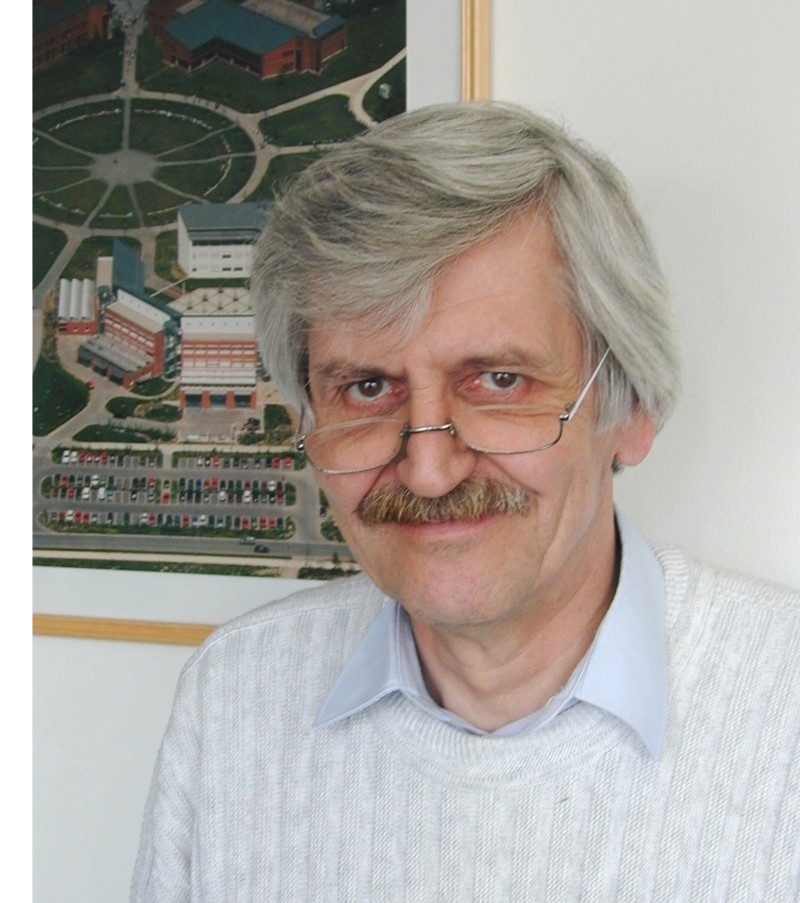 Born in Dresden on 8 May 1941, Friedrich Seifert’s interest in the geosciences began at an early age through a fascination with palaeontology. What began as a childhood interest in fossils quickly developed into a scientific vocation. Remarkably, his first scientific publication appeared when he was only eighteen years old and concerned Scaphopoda fossils from Tertiary rocks of northwestern Germany. He studied geology and mineralogy at the University of Kiel and at ETH Zürich, where extensive field experiences further strengthened his interest in metamorphic rocks and the processes responsible for their formation.
Recognising that experimental data were essential for understanding the origins of rocks and minerals, Fritz turned increasingly toward laboratory-based mineralogical research. His doctoral work in Kiel focused on pressure–temperature phase relations in micas, one of the more complex mineral groups, and already demonstrated the combination of careful experimentation, deep physical insight and scientific persistence that would characterise his later career.
After completing his habilitation at Ruhr University Bochum, where he became associate professor in 1972, he spent the first of many research periods at the Geophysical Laboratory in Washington D.C. The Carnegie Institution’s Geophysical Laboratory was at that time one of the very few places worldwide where high-pressure and high-temperature experiments were being used to investigate the deep Earth. During this period Fritz also developed interests in Mössbauer spectroscopy and cation ordering phenomena in minerals, recognising their importance for understanding cooling histories and geological timescales.
In 1974, at 33 years of age, Friedrich Seifert was appointed full professor of Mineralogy and Petrology at the University of Kiel. There he built one of Europe’s leading experimental laboratories and began an exceptionally productive scientific period. His work combined field observations, experiments and thermodynamic analysis in a way that continually opened new directions in mineralogical research. His studies on silicate melts and their structural controls on physical properties made lasting contributions to our understanding of volcanic and magmatic processes.
On 1 April 1986, Fritz became the founding director of the newly established Bayerisches Geoinstitut (BGI) at the still young University of Bayreuth. Under his leadership, the BGI rapidly developed into a dynamic and internationally recognised institution centred around advanced experimental laboratories and an unusually collaborative scientific atmosphere. Researchers from across the world were drawn to Bayreuth not only because of the institute’s facilities, but also because of the intellectual openness, generosity and enthusiasm that characterised its environment. Many scientists who spent formative years at the BGI remember the institute as a place where ambitious and sometimes unconventional ideas could be pursued. Discussions over coffee or beer often developed into new experiments, collaborations and long-lasting scientific friendships. Fritz had an extraordinary ability to identify the essential scientific questions underlying complex problems and colleagues were often surprised to discover that he had already thought deeply about subjects they considered highly specialised or obscure. At the same time, he was personally modest and frequently declined co-authorship on work to which he felt he had contributed only ideas.
Alongside his scientific achievements, Friedrich Seifert gave extraordinary service to the wider geoscience community. He served as editor for several scientific journals and participated in numerous national and international scientific committees and organisations, including the German Research Foundation (DFG), the Humboldt Foundation and the European Science Foundation. His work was recognised through many distinctions and honours, among them the Leibniz Prize of the Deutsche Forschungsgemeinschaft, the Mineralogical Society of America Award, the Abraham-Gottlob-Werner Medal of the German Mineralogical Society and the Walter Kertz Medal of the German Geophysical Society. He was also a member of several academies, including the Leopoldina, the Academia Europaea, the Bavarian Academy of Sciences and Humanities and the Academy of Sciences in Göttingen.
In recognition of his contributions to high-pressure mineralogy, the mineral seifertite, a high-pressure polymorph of quartz discovered in a Martian meteorite, was named in his honour in 2008.
When Fritz retired in 2006, he had already seen the institute he founded grow into one of the world’s leading centres for experimental geosciences. By then, many former students, postdoctoral researchers and visitors to the BGI had themselves become scientific leaders across the world.
Friedrich Seifert’s exceptional drive and ability to bring together people and ideas has left a lasting mark on the geosciences and on everyone fortunate enough to work with him. His work and his vision remain deeply embedded in the foundations of the Bayerisches Geoinstitut and in this way his influence will continue to shape future generations of geoscientists.
The Bayerisches Geoinstitut will honour his memory.
Tel: +49-(0) 921 55 3700 / 3766, Fax: +49-(0) 921 55 3769, E-mail: bayerisches.geoinstitut(at)uni-bayreuth.de